
From rustic farm-to-table feasts to sophisticated fine-dining experiences, the artful presentation of salads plays a crucial role. This in-depth exploration delves into the nuances of selecting the perfect salad bowl and tongs, examining diverse design considerations, from material choices to ergonomic features. We’ll uncover how these seemingly simple elements can elevate the dining experience, considering factors like sustainability, cost-effectiveness, and cultural significance.
Choosing the right salad bowl and tongs isn’t just about aesthetics; it’s about functionality and experience. Different shapes and sizes of bowls, paired with tongs of varying materials and grip, impact the overall dining experience. This article examines the critical elements to consider for both individual and large-scale events, highlighting the impact on food presentation and consumption.
Salad Bowl Design
Salad bowls, often overlooked, play a crucial role in the dining experience. Beyond their utilitarian function, they significantly influence the presentation and enjoyment of salads. The right bowl shape, size, and material can elevate a simple salad to a culinary masterpiece. Modern design trends are pushing the boundaries of salad bowl aesthetics, considering not only form but also function.Salad bowl design encompasses more than just visual appeal.
The shape and size directly impact how the salad is perceived and consumed. Bowl depth, for instance, influences the ability to fully enjoy the dressing and the overall tactile experience. Materials chosen must strike a balance between durability, hygiene, and visual appeal, ensuring a pleasant and safe dining experience.
Salad Bowl Designs
Various shapes and sizes of salad bowls cater to different meal settings and dietary preferences. Five distinct designs are presented below, each with its own unique attributes.
- The Classic Round Bowl: A timeless choice, the round bowl is versatile and suitable for most salad types. Its symmetrical shape allows for even distribution of ingredients, making it ideal for sharing or individual servings. Its simple design ensures the salad’s components remain visually appealing. This style is particularly well-suited for casual dining or everyday meals.
- The Deep Rimmed Bowl: This design offers a larger surface area for plating, which is especially helpful when serving substantial salads or those with substantial toppings. The deep rimmed bowl is perfect for holding dressings without spilling and ensures that the salad’s ingredients are fully submerged in the dressing, enhancing the overall flavor experience. This style works well for large family meals or buffet-style gatherings.
- The Square or Rectangular Bowl: These unique designs offer a modern and contemporary approach. They are well-suited for salads with distinct or contrasting elements, as the shape helps emphasize the variety and arrangement of the components. This design is especially useful for showcasing the colorful textures and flavors in the salad, suitable for individuals who enjoy a structured and visually appealing meal.
- The Shallow Bowl: A shallow bowl allows for a lighter, less overwhelming salad presentation. This shape is particularly well-suited for salads that feature lighter dressings or delicate ingredients, emphasizing the freshness and textures of the components. This style is suitable for casual meals or when a more delicate presentation is desired.
- The Wide, Shallow Bowl: This bowl design is great for salads that require more space for larger ingredients like pasta, grains, or vegetables. Its wide surface area enables a broader presentation of various salad elements, showcasing the richness and depth of the ingredients. This style works well for both casual and formal settings, especially when incorporating diverse ingredients.
Materials for Salad Bowls
The selection of materials for salad bowls significantly impacts the overall experience. Durability, hygiene, and aesthetics are key considerations.
- Ceramic: Ceramic bowls offer a classic and aesthetically pleasing option. They are generally durable and easy to clean, making them a practical choice for everyday use. The natural beauty of the material adds a touch of elegance to any meal.
- Glass: Glass bowls are transparent, allowing diners to appreciate the colors and textures of the salad’s components. They are often considered hygienic due to their smooth surfaces and ability to be thoroughly cleaned. Glass bowls offer a sleek and modern aesthetic.
- Stainless Steel: Stainless steel bowls provide exceptional durability and resistance to damage. They are hygienic, easy to clean, and suitable for various salad types, including those that require extra care, such as salads with raw ingredients. Stainless steel bowls offer a practical and stylish option.
- Melamine: Melamine bowls are lightweight, unbreakable, and aesthetically pleasing. They are a popular choice for outdoor gatherings or events due to their resilience. The material is also often available in vibrant colors, adding a touch of vibrancy to the dining experience.
Bowl Shape and Salad Consumption
The shape of the salad bowl directly impacts how the salad is presented and consumed.
- Round bowls provide a symmetrical presentation, allowing for even distribution of ingredients and dressings. They are easy to grasp and hold, enhancing the overall dining experience.
- Deep bowls allow for more substantial salads and ensure that all ingredients, especially the dressing, are fully immersed in the flavor, providing a richer culinary experience.
- Shallow bowls are perfect for highlighting the textures and colors of the salad’s ingredients. The light presentation emphasizes the fresh flavors and textures, offering a different approach to the dining experience.
Bowl Depth and Functionality
Bowl depth significantly influences the salad experience.
- Deep bowls provide ample space for substantial salads, ensuring that dressings and ingredients are fully contained. The depth enhances the ability to mix and coat the ingredients evenly with the dressing, creating a more complete flavor experience.
- Shallow bowls offer a lighter presentation and are ideal for salads with delicate ingredients or light dressings. The shallower depth allows the ingredients to be fully appreciated without being overwhelmed by the dressing, offering a different and more delicate flavor experience.
Salad Bowl Design Comparison
| Image | Description | Material | Use Case |
|---|---|---|---|
| (Visual representation of a round ceramic bowl with a salad) | Classic round ceramic bowl, suitable for most salads, versatile for individual or shared servings. | Ceramic | Casual dining, everyday meals |
| (Visual representation of a deep rimmed glass bowl with a salad) | Deep rimmed glass bowl, excellent for substantial salads, good for holding dressings without spilling. | Glass | Family meals, buffet-style gatherings |
| (Visual representation of a square melamine bowl with a salad) | Square melamine bowl, modern and contemporary design, ideal for salads with contrasting ingredients. | Melamine | Outdoor events, casual settings |
| (Visual representation of a shallow stainless steel bowl with a salad) | Shallow stainless steel bowl, highlights textures and colors, suitable for light dressings. | Stainless Steel | Casual meals, delicate salads |
Tongs for Salad Bowls

Salad bowls, a cornerstone of healthy eating, demand specialized serving tools. Beyond their aesthetic appeal, tongs designed for salad bowls must prioritize factors like material, grip, and size to enhance the dining experience and minimize food waste. This analysis delves into the critical features of these essential utensils.The design of salad tongs significantly impacts both the enjoyment and practicality of consuming a salad.
Properly chosen tongs can improve the user experience, reduce food waste, and encourage healthier eating habits. From the material selection to the ergonomic grip, careful consideration of these elements contributes to the overall effectiveness of salad serving tools.
Key Features of Salad Tongs
Salad tongs are designed with specific features in mind to enhance both the practicality and aesthetic appeal of the salad-serving experience. The grip, size, and material of the tongs are crucial aspects determining their overall performance. A secure grip prevents accidental drops and ensures controlled portioning, while an appropriate size allows for easy maneuvering within the bowl and a comfortable grasp for the user.
The material plays a vital role in both durability and user comfort.
Material Considerations
The material of salad tongs significantly influences their performance and longevity. Stainless steel tongs are known for their durability and resistance to corrosion, making them a popular choice for frequent use. However, the weight of stainless steel tongs can sometimes make them less comfortable to hold for extended periods. Plastic tongs, on the other hand, are generally lightweight and more comfortable to use, but they may not be as durable as stainless steel, and certain plastics can be prone to warping or discoloration over time.
Bamboo tongs, a sustainable alternative, offer a unique aesthetic and eco-friendly option but might not have the same level of durability as stainless steel.
Ergonomics of Salad Tongs
Ergonomic design in salad tongs is paramount for a comfortable and efficient dining experience. The handle shape and size should allow for a secure and stable grip, minimizing strain on the user’s hand, even during prolonged use. The balance of the tongs is crucial for easy maneuvering and portion control. Tongs with a curved or contoured handle can offer enhanced comfort and grip.
Reducing Food Waste and Encouraging Healthy Eating
Salad tongs play a vital role in minimizing food waste. Precise portioning and controlled handling with tongs help prevent over-consumption and limit the amount of uneaten food. This conscious approach to serving encourages responsible consumption and fosters healthy eating habits. Portion control, a key element of mindful eating, is significantly aided by using tongs.
Beyond Salad Serving
Salad tongs are not limited to salad use. Their utility extends to serving various other foods, including small fruits, vegetables, or appetizers. Their lightweight design and secure grip make them versatile for a range of culinary tasks. Their use in these contexts expands their practical applications beyond the typical salad bowl.
Design Considerations for Specific Salad Types
The design of salad tongs can be tailored to accommodate specific salad types. For leafy green salads, tongs with fine-mesh or slotted designs can help prevent the leaves from tearing. For grain-based salads, tongs with a wider surface area might be more appropriate to avoid scattering the grains. Different types of salads require varying design elements to optimize the serving experience and preserve the integrity of the food.
Table of Salad Tongs
| Image | Material | Features | User Group |
|---|---|---|---|
| (Imagine a picture of stainless steel tongs with a smooth, rounded handle) | Stainless Steel | Durable, resistant to corrosion, good grip | Frequent users, those concerned about durability |
| (Imagine a picture of plastic tongs with a contoured handle) | Plastic | Lightweight, comfortable, various colors and designs | Casual users, those seeking comfort and affordability |
| (Imagine a picture of bamboo tongs with a natural finish) | Bamboo | Sustainable, eco-friendly, unique aesthetic | Eco-conscious consumers, those seeking sustainable options |
| (Imagine a picture of slotted tongs with fine mesh) | Stainless Steel | Preserves leafy greens, prevents tearing | Salad chefs, those preparing delicate salads |
Serving Salad with Tongs
Mastering the art of salad presentation goes beyond the bowl; it extends to the tools used to serve. Employing tongs offers a level of control and precision that enhances the dining experience, allowing for both aesthetic appeal and efficient portioning. This precision is particularly valuable when dealing with diverse salad components.Proper use of tongs elevates the overall experience of serving and consuming salad.
This technique allows for precise control over portions, a crucial element for both individual servings and large gatherings. It also allows for the careful separation and arrangement of salad components, resulting in a visually appealing and well-balanced presentation.
Proper Techniques for Using Tongs
The technique for using tongs to serve salad is critical for both a good visual and practical experience. Begin by holding the tongs firmly, ensuring a secure grip to avoid dropping ingredients. Use a gentle but firm pressure to grasp the desired portion of salad. Avoid squeezing or crushing the delicate components. Lift the salad with the tongs at an angle to maintain its shape and integrity.
Avoid scraping the salad bowl directly with the tongs, which could cause the ingredients to slide and make the salad messy. Instead, use the tongs to gently remove the desired portion.
Separating Salad Ingredients with Tongs
Salad ingredients vary greatly in texture and size. Using tongs allows for the selective separation of different ingredients. For instance, you can use tongs to separate leafy greens from vegetables or to pick out protein pieces. This technique allows for a customized salad, catering to individual preferences and dietary needs. Arugula and shredded carrots can be easily separated and arranged individually using tongs, ensuring each component maintains its visual appeal.
Portioning Salad with Tongs
Portioning salad with tongs is a simple, yet precise, process. Start by holding the tongs at the base of the salad bowl, and then carefully lift the desired amount. Practice a gentle, controlled motion to avoid breaking or scattering the salad. Control the portion size by adjusting the amount of salad lifted. The ability to measure and control portion sizes is vital, particularly for dietary restrictions or maintaining portion control.
Advantages of Using Tongs over Other Serving Tools
Tongs offer several advantages over other serving tools. The ability to precisely grasp and lift salad components, including delicate greens or small vegetables, is a key advantage. This precision is essential to maintaining the shape and visual appeal of the salad. They are easy to clean and maintain, particularly when compared to utensils like spoons or spatulas.
Tongs are also versatile; they can be used to serve various types of food, making them a valuable addition to any kitchen.
Creating Visually Appealing Salad Presentations
Using tongs allows for a high degree of control over the arrangement of salad components. By strategically positioning elements, a visually appealing presentation can be created. Layering different ingredients in the bowl using tongs creates a beautiful aesthetic. For example, a salad with layers of greens, vegetables, and protein can be strategically arranged with tongs, forming visually appealing patterns.
Examples of Arranging Salad Components
“Arrange a bed of mixed greens in the center of the bowl, using tongs. Then, carefully add sliced cucumbers and cherry tomatoes, using tongs to place them around the greens. Finally, gently place a grilled chicken breast on top of the salad with tongs, creating a visually balanced presentation.”
This demonstrates a basic method of arranging salad components. Other examples include layering different colored vegetables, creating patterns with tongs, or using tongs to create a visually balanced design in the bowl.
Comparing Tongs with Other Serving Tools
| Tool | Pros | Cons | Use Cases |
|---|---|---|---|
| Tongs | Precision, maintains shape, versatile | Can be slow for large portions, may not be suitable for all ingredients | Salads with delicate greens, layered presentations, portion control |
| Spoons | Fast, good for larger portions | Can crush delicate ingredients, less control over arrangement | Soups, stews, larger portions of salad |
| Spatulas | Useful for certain textures | Can be less precise than tongs, not ideal for all salad types | Salads with cooked ingredients, moving ingredients around |
| Serving spoons | Good for specific components, suitable for large gatherings | May not be as precise as tongs for certain salad ingredients | Portioning larger quantities, serving salads with large components |
Salad Bowl and Tongs Combinations
From simple greens to elaborate grain bowls, the interplay of salad bowl and tong design can significantly enhance the dining experience. Selecting the right combination not only impacts presentation but also influences how the food is consumed, ultimately shaping the overall meal’s aesthetic and practicality. The proper selection can elevate a simple meal into a culinary delight.
Salad Type and Bowl/Tong Combinations
Choosing the right salad bowl and tongs hinges on the salad’s ingredients and intended presentation. Different combinations cater to various textures and aesthetic preferences. A well-considered pairing enhances the dining experience, from the initial visual appeal to the tactile satisfaction of eating.
- For leafy greens and light dressings: Shallow, wide bowls with delicate, ergonomically designed tongs are ideal. These allow for easy tossing and maneuvering of the salad while showcasing the vibrant colors of the greens. The light, airy nature of the salad is perfectly complemented by the refined aesthetic of the combination. An example is a light-colored ceramic bowl paired with brushed stainless steel tongs.
- For grain bowls and substantial salads: Deep, wide bowls with sturdy, heavy-duty tongs are better suited. These bowls can accommodate a variety of ingredients, including grains, proteins, and vegetables, making them versatile for hearty meals. The combination enhances the rustic presentation of the meal and allows for easier handling of the ingredients. A stoneware bowl with thick, black metal tongs would be an appropriate pairing.
- For Asian-inspired salads with delicate vegetables: Small, round bowls with slender, fine-tipped tongs work well. These combinations showcase the intricate details of the salad ingredients and highlight the subtle flavors and textures. The small size of the bowl and delicate tongs create a sophisticated aesthetic, perfect for an elegant dining experience. A ceramic bowl with intricate patterns, paired with silver-plated, fine-tipped tongs, would fit this category.
- For elaborate Mediterranean salads with olives and feta: Wide, shallow bowls with sturdy, yet flexible, tongs are best. The flexibility of the tongs allows for efficient handling of the diverse ingredients, while the bowl’s width prevents the salad from spilling. The bowl’s style and the tong’s robustness complement the substantial nature of the salad. A ceramic bowl with a slightly rustic design, paired with black, robust metal tongs, would work well.
- For fruit salads and desserts: Shallow, wide bowls with delicate, light-colored tongs are optimal. The lightness and transparency of the bowl allow for a clear view of the colorful fruits. The delicate tongs are ideal for maneuvering individual pieces of fruit without damaging them. A glass bowl with a simple design, paired with translucent, plastic tongs, is a good choice.
Aesthetic Impact of Matching Sets
The aesthetic impact of matching salad bowl and tong sets is significant. Consistency in color and material creates a cohesive table setting, enhancing the overall visual appeal of the meal. Matching sets project a sense of elegance and sophistication. The visual harmony between the bowl and tongs can elevate a simple salad into a culinary presentation.
Versatility of Different Combinations
Different bowl and tong combinations offer varying degrees of versatility for various meals. Shallow bowls with delicate tongs are ideal for light salads, while deep bowls with sturdy tongs are more suited for hearty salads and grain bowls. The choice should align with the type of meal being served.
Cohesive Table Settings
Creating a cohesive table setting using salad bowls and tongs involves careful consideration of the overall aesthetic. Matching or complementary colors and materials are essential. The style of the bowl and tongs should complement the overall theme of the meal. For example, a rustic-themed dinner might utilize earthenware bowls with wooden tongs, while a modern dining experience could feature sleek, contemporary bowls and stainless steel tongs.
Safety and Hygiene Considerations
Maintaining the safety and hygiene of salad bowls and tongs is paramount to preventing foodborne illnesses. Proper cleaning procedures and material selection are crucial for preventing contamination and ensuring a safe dining experience. This section details the critical elements of safe salad preparation and service.Safe food handling practices, from initial preparation to final consumption, play a vital role in preventing foodborne illnesses.
Following proper hygiene protocols ensures that the salad remains safe and appealing to consumers.
Importance of Hygiene
Ensuring meticulous hygiene practices is critical when handling salad bowls and tongs. Contamination from improper cleaning or inadequate hand hygiene can introduce harmful bacteria, viruses, or parasites into the salad, leading to foodborne illnesses. Cross-contamination is a significant risk; therefore, the utmost care should be taken during every stage of preparation. Proper hygiene prevents the spread of pathogens and safeguards public health.
Cleaning Procedures
Implementing effective cleaning procedures for salad bowls and tongs is essential for maintaining a hygienic environment. A thorough cleaning process prevents the buildup of food residue, which can harbor microorganisms.
- Thoroughly wash salad bowls and tongs with hot, soapy water, ensuring all surfaces are clean. Rinse thoroughly to remove all traces of soap.
- Sanitize the bowls and tongs using a food-grade sanitizer solution. Follow the manufacturer’s instructions for the specific sanitizer and contact time.
- Allow salad bowls and tongs to air dry completely on a clean surface to prevent the growth of microorganisms.
Avoid placing them on surfaces that may be contaminated.
- Store cleaned items in a designated area, separate from raw ingredients, to maintain hygiene and prevent cross-contamination.
Role of Materials
The material used for salad bowls and tongs significantly impacts their safety and hygiene. Non-reactive materials that do not absorb or retain food particles are ideal.
- Stainless steel is a highly durable and hygienic material for salad bowls and tongs. Its non-porous surface prevents the retention of bacteria, making it suitable for repeated use.
- Plastic materials should be non-porous and resistant to cracking or chipping. Choose food-grade plastics that do not leach chemicals into the food.
- Wood, if used, must be treated to prevent bacterial growth and must be thoroughly cleaned and sanitized after each use.
Proper Food Handling Practices
Adhering to proper food handling practices is crucial when serving salad. This encompasses the entire process from preparation to serving.
- Wash hands thoroughly with soap and water before and after handling salad ingredients.
- Use separate cutting boards and utensils for raw and cooked ingredients to prevent cross-contamination.
- Keep salad ingredients refrigerated until ready to serve to inhibit bacterial growth.
- Serve salad at the correct temperature to prevent the growth of bacteria.
Safe Storage
Safe storage of salad bowls and tongs is essential to prevent contamination and maintain hygiene.
- Store clean salad bowls and tongs in a dedicated, clean area, preferably in a covered container or cabinet, to avoid dust or other contaminants.
- Separate raw and cooked ingredients to prevent cross-contamination.
- Avoid stacking salad bowls and tongs to prevent scratching or damage.
Sustainability and Environmental Impact
The growing awareness of environmental concerns necessitates a careful consideration of the materials used in everyday products, including salad bowls and tongs. Choosing sustainable alternatives minimizes the ecological footprint of our dining habits and contributes to a healthier planet. Consumers are increasingly seeking products that align with their values and contribute to a more environmentally responsible lifestyle.The selection of materials for salad bowls and tongs directly impacts the environment, from the sourcing of raw materials to the manufacturing process and eventual disposal.
This analysis delves into eco-friendly options, assessing the environmental impact of different choices, and emphasizing the benefits of reusable items.
Eco-Friendly Materials for Salad Bowls and Tongs
A wide array of eco-friendly materials are now available for salad bowls and tongs. These options often prioritize renewable resources, reduced waste, and minimal environmental impact throughout their lifecycle. This exploration identifies key sustainable materials and assesses their relative merits.
Environmental Impact of Different Materials
The environmental footprint of materials varies significantly. Compostable plastics, derived from agricultural byproducts, decompose naturally and reduce landfill waste. However, their production and decomposition conditions can influence the overall impact. Alternatively, sustainably sourced wood or bamboo offers a renewable resource, but the manufacturing process and transportation considerations should be examined. Furthermore, the use of recycled materials for bowls and tongs significantly reduces the need for virgin resources, promoting circularity in product design.
Benefits of Reusable Salad Bowls and Tongs
Reusable salad bowls and tongs offer substantial environmental advantages over disposable counterparts. They reduce the volume of single-use plastics entering landfills and lessen the reliance on finite resources. The repeated use of reusable items significantly decreases the demand for new products, leading to a smaller environmental footprint. This approach to tableware fosters a circular economy, where products are reused and recycled instead of discarded.
Furthermore, the longevity of reusable items can lead to cost savings over time.
Comparison of Sustainability
A comparative analysis of various bowl and tong options reveals that sustainably sourced bamboo and wood, combined with recycled plastic, present strong alternatives to conventional materials. The inherent qualities of each material, along with their manufacturing processes and end-of-life management, influence their overall sustainability profile. For example, bamboo, a rapidly renewable resource, can be a viable option if harvested responsibly.
Conversely, certain types of plastic, even when recycled, might have environmental concerns related to their processing and eventual disposal.
Sustainable Material Comparison Table
| Material | Source | Pros | Cons |
|---|---|---|---|
| Recycled Plastic | Post-consumer plastic waste | Reduces reliance on virgin resources, lowers carbon footprint, promotes circularity | May require specific recycling processes, potential contamination issues, quality may vary depending on the source |
| Bamboo | Rapidly renewable plant | Biodegradable, renewable resource, naturally strong and lightweight | Requires careful harvesting practices, may not be suitable for all applications, potential water usage concerns during cultivation |
| Compostable Plastic | Agricultural byproducts | Decomposes naturally, reduces landfill waste | Decomposition conditions affect effectiveness, may not be suitable for all environments, potential for contamination |
| Sustainable Wood | Certified sustainably managed forests | Renewable resource, naturally strong, visually appealing | Manufacturing processes may vary, transportation distances impact carbon footprint, sourcing concerns remain |
Cost-Effectiveness of Salad Bowls and Tongs
The rising popularity of salad-based meals has fueled a demand for practical and aesthetically pleasing servingware. Choosing the right salad bowls and tongs, however, requires careful consideration of factors beyond just aesthetics, including cost-effectiveness and durability. Consumers need to weigh the initial investment against the long-term value proposition.Price points for salad bowls and tongs vary considerably, reflecting differences in material, design, and brand.
A wide spectrum of options caters to diverse budgets, from budget-friendly plastic sets to premium stainless steel or ceramic choices. Understanding these price variations allows consumers to make informed decisions aligned with their specific needs and financial constraints.
Price Range Comparison
Salad bowls and tongs are available across a broad price spectrum. Budget-friendly options, often made from melamine or durable plastic, are generally priced under $20 for a set. Mid-range options, typically crafted from stainless steel or ceramic, can range from $20 to $50, depending on the set’s size and design. Premium sets, often featuring high-quality materials like wood or artisan-designed ceramics, can easily exceed $50.
Understanding these price points allows for informed choices based on desired functionality and budget.
Value Proposition of Materials
The value proposition of various materials depends on the intended use and frequency of use. Melamine and plastic are excellent budget-friendly options, especially for occasional use, as they are lightweight, shatter-resistant, and easy to clean. Stainless steel provides a sturdy, hygienic choice for frequent use, with its ability to withstand repeated washings and maintain its aesthetic appeal over time.
Ceramic bowls offer a stylish and often elegant presentation, although they might be more susceptible to chipping or breakage compared to stainless steel. Wood, while visually appealing, might not be as practical for frequent use due to potential staining or water absorption.
Budget-Friendly Options
For consumers seeking cost-effective solutions, a variety of budget-friendly options are available. Melamine sets are a good starting point, providing a substantial value for money. Plastic salad bowls and tongs often come in vibrant colors and patterns, suitable for creating a festive atmosphere. Furthermore, look for sets that include both bowls and tongs in a single purchase, which can often provide better value than buying them separately.
Long-Term Cost-Effectiveness
Investing in durable salad bowls and tongs can significantly enhance long-term cost-effectiveness. Durable stainless steel or ceramic sets are more likely to maintain their functionality and aesthetic appeal over time, reducing the need for frequent replacements. The initial investment in quality materials can be offset by the reduced costs associated with replacements over several years. By opting for quality products, consumers can reduce their overall expenditure on servingware over time.
Examples of long-lasting products are sets that include high-quality stainless steel bowls with durable tongs, allowing for consistent and efficient use over an extended period. The longevity of such items translates into lower long-term costs, making them a worthwhile investment.
Cultural Considerations
Global dining traditions exhibit diverse approaches to serving salads, reflecting nuanced cultural preferences and historical contexts. The selection of serving vessels and utensils often conveys implicit messages about the meal’s presentation and social etiquette. Understanding these cultural nuances is crucial for effectively introducing salad bowls and tongs to various communities.Cultural perceptions of salads, as a standalone dish or an accompaniment, vary widely.
This influences how they are presented and consumed. Salad bowls and tongs, while seemingly simple tools, play a significant role in reinforcing these cultural practices and facilitating the experience of eating salads in diverse settings.
Cultural Practices Related to Serving Salad
Different cultures have unique customs regarding salad preparation and presentation. In some societies, salads are served as a light starter, whereas in others, they are an integral part of the main course. The preparation method, whether it’s a simple toss or a more elaborate layering technique, also varies significantly across cultures.
Role of Salad Bowls and Tongs in Different Cultures
The selection of salad bowls and tongs often reflects cultural preferences and aesthetic sensibilities. For instance, in some Asian cultures, elaborate ceramic bowls are used to showcase the visual appeal of the ingredients, while in other regions, simpler, functional bowls might be preferred. The type of tongs used also varies, ranging from traditional chopsticks in East Asian cuisine to more contemporary metal tongs in Western settings.
The choice of materials can also reflect sustainability considerations.
Salad Bowls and Tongs in Various Cuisines
Salad bowls and tongs are adapted to suit various culinary traditions. In Mediterranean cuisine, shallow bowls are frequently used to serve a variety of ingredients, allowing for easy mixing and sharing. Japanese cuisine often features delicate ceramic bowls, complementing the aesthetic appeal of the ingredients. In some South American cultures, large communal bowls are used to encourage shared meals, emphasizing social interaction during the dining experience.
Examples of Adaptation to Dining Traditions
Salad bowls and tongs are adapted to different dining styles and contexts. In formal settings, elegant salad bowls and silver tongs might be used to create a refined dining experience. In casual settings, plastic bowls and disposable tongs might be more appropriate. The selection of materials and design elements reflect the occasion and desired atmosphere. Furthermore, the size and shape of the bowl and tongs are crucial for efficient and convenient use.
Sustainability Considerations in Cultural Context
The choice of salad bowls and tongs can align with local sustainability initiatives. In some communities, the use of locally sourced, sustainable materials for the bowls and tongs is valued. For instance, using bamboo or recycled plastic can be preferred in areas with strong environmental consciousness. This aligns with cultural values that emphasize environmental responsibility.
Modern Trends in Salad Bowls and Tongs
Salad bowls and tongs, seemingly simple tools, are undergoing a period of creative reinvention, driven by evolving consumer preferences and technological advancements. The shift reflects a broader trend in food presentation and an increasing emphasis on both aesthetics and functionality. This evolution extends beyond mere practicality, influencing dining experiences and contributing to the overall culinary landscape.Contemporary design is prioritizing both the visual appeal and the tactile experience of using salad bowls and tongs.
This includes considerations for material choices, shape innovation, and the seamless integration of these elements into the broader dining setting. The incorporation of modern design principles ensures these tools are not just functional but also aesthetically pleasing, enhancing the overall dining experience.
Current Design Trends for Salad Bowls
Modern salad bowls are exhibiting a trend towards versatility. They are moving beyond the traditional round or square shapes, incorporating unique geometries and asymmetry. This design ethos aims to complement a wide array of dining styles and table settings. Materials like tempered glass, sustainably sourced bamboo, and ceramic are becoming increasingly popular for their aesthetic qualities and practical applications.
Glass, in particular, offers a clean, transparent presentation that highlights the freshness of the salad ingredients.
Innovative Materials and Designs for Salad Bowls and Tongs
The use of innovative materials in salad bowls and tongs is a significant trend. Sustainable materials, such as bamboo and recycled plastic, are gaining popularity, driven by growing consumer demand for environmentally friendly products. Manufacturers are exploring ways to create aesthetically pleasing salad bowls and tongs using these materials. For example, bamboo salad bowls often feature intricate patterns and textures that enhance their visual appeal.
Innovative designs are also emerging, including bowls with built-in compartments for separating dressings and ingredients, allowing for a more controlled and organized dining experience. Tongs are now being crafted with ergonomic handles for enhanced comfort and improved grip, particularly important for serving large or heavy salads.
Influence of Social Media on Trends in Saladware
Social media platforms significantly impact the perception and adoption of new trends in salad bowls and tongs. Influencers and food bloggers showcase innovative designs and creative presentations, creating a demand for unique and visually appealing saladware. This influence extends beyond the individual level, as restaurants and caterers are also adopting these trends, creating a ripple effect across the culinary industry.
The ability to share visually compelling food presentations has a direct effect on consumer perception and preference.
Popular Salad Bowl and Tong Designs Based on Current Trends
- Geometric Bowls: These bowls feature angular shapes and asymmetrical designs, creating a contemporary and visually striking aesthetic. They often complement modern or minimalist dining styles.
- Elevated Bowls: Bowls with raised edges or unique structural elements elevate the visual presentation of the salad, drawing attention to the ingredients and enhancing the overall dining experience.
- Multi-Functional Bowls: Bowls that incorporate built-in compartments for dressings or additional elements are becoming increasingly popular, enhancing the convenience and versatility of the dining experience.
- Sustainable Materials: The increasing use of bamboo, recycled plastic, and other eco-friendly materials reflects a growing consumer preference for environmentally responsible products. This trend is gaining traction due to the growing awareness of environmental concerns.
- Ergonomic Tongs: Tongs with comfortable and well-designed handles, often featuring textured grips or sculpted shapes, are prioritized for ease of use and improved handling, particularly when serving larger salads.
Illustrative Examples
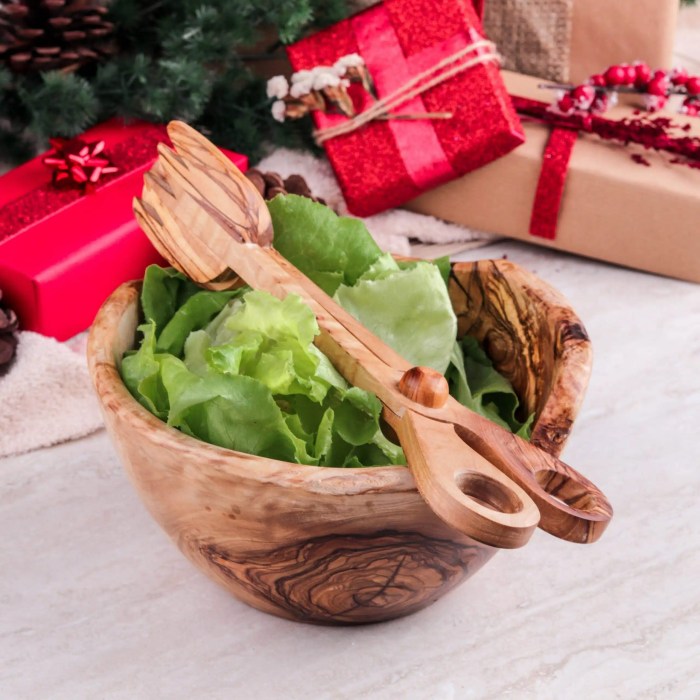
Salad bowls and tongs, when thoughtfully paired, can elevate the dining experience, transforming a simple meal into a visually appealing and practical feast. The selection of ingredients, bowl shape, and tongs style all play a critical role in creating a cohesive and engaging presentation. The following examples showcase diverse applications, highlighting the versatility of this seemingly simple combination.
Salad Bowl Presentations
This section provides five distinct salad presentations, showcasing how different bowl and tong combinations can enhance the overall dining experience. Each example emphasizes visual appeal and practical functionality, taking into account the characteristics of the chosen ingredients and utensils.
Presentation 1: Mediterranean Medley
This presentation focuses on vibrant colors and fresh flavors, perfect for a summer lunch or a light dinner. A shallow, wide, white ceramic bowl, with a slightly flared rim, is ideal for a visual display of ingredients. The bowl’s shape allows for ample space to arrange the ingredients in a visually appealing manner. The use of delicate, silver-toned salad tongs enhances the overall aesthetic and allows for easy and precise portioning.Ingredients include: mixed greens, cherry tomatoes, crumbled feta cheese, Kalamata olives, cucumber slices, and a vibrant lemon-herb vinaigrette.
The color palette, from the deep greens of the lettuce to the red of the tomatoes and olives, creates a visually striking dish. The feta cheese adds a salty contrast, complementing the freshness of the other ingredients. The bowl’s shape facilitates easy maneuvering with the tongs, and the vinaigrette ensures each bite has a balanced flavor profile.
Presentation 2: Asian Fusion Delight
This presentation emphasizes a harmonious blend of textures and flavors, inspired by Asian cuisine. A deep, slightly tapered, ceramic bowl with a textured surface, in a warm earthen tone, is chosen. This style of bowl is ideal for containing a substantial salad. Matching dark-colored wooden tongs provide a sophisticated contrast against the bowl.Ingredients include: mixed greens, shredded carrots, edamame, thinly sliced bell peppers, shredded chicken, and a sesame ginger vinaigrette.
The inclusion of protein, such as chicken, adds substance to the salad. The textures are balanced by the crunch of the carrots, the smoothness of the edamame, and the vibrant colors of the peppers. The wooden tongs are well-suited for handling the various textures, from the soft edamame to the crispier vegetables.
Presentation 3: Southwest Fiesta
This presentation embodies the vibrant flavors of Southwestern cuisine. A round, slightly elevated, stoneware bowl with a southwestern-inspired pattern adds visual appeal. Matching, colorful wooden tongs are ideal for a visually appealing combination.Ingredients include: romaine lettuce, black beans, corn, diced red onion, crumbled cotija cheese, and a spicy chipotle lime dressing. The bold colors of the bowl, with a pattern that complements the ingredients, enhance the presentation.
The spicy chipotle lime dressing adds a touch of warmth, balancing the freshness of the other ingredients. The wooden tongs are designed to accommodate the varied textures and sizes of the ingredients.
Presentation 4: Caprese Celebration
This presentation highlights simplicity and elegance. A shallow, white porcelain bowl, with a classic, rounded shape, creates a refined aesthetic. Silver-toned salad tongs complete the sophisticated look.Ingredients include: fresh mozzarella balls, sliced tomatoes, basil leaves, and a balsamic glaze. The visual appeal of the fresh ingredients is enhanced by the simplicity of the bowl and tongs. The delicate balance of flavors and textures is achieved through the fresh ingredients.
The salad tongs allow for easy handling of the mozzarella and tomatoes.
Presentation 5: Tropical Tropical Treat
This presentation embodies a taste of the tropics. A glass bowl, with a tropical-themed pattern, provides a contemporary and stylish presentation. Light-colored plastic tongs, with a design that complements the bowl, complete the look.Ingredients include: mixed greens, mango chunks, pineapple chunks, shredded coconut, and a tangy lime dressing. The tropical design of the bowl enhances the overall presentation. The combination of fresh fruits and vegetables offers a delightful balance of flavors and textures.
The plastic tongs are suitable for handling the varied textures, from the soft fruit to the greens.
Last Recap
In conclusion, selecting the right salad bowl and tongs is a multifaceted decision, influenced by a range of factors, from aesthetic appeal to practical considerations. This guide has explored the various design choices, materials, and cultural contexts to provide a comprehensive understanding of this essential dining accessory. Ultimately, the perfect combination enhances the entire dining experience, transforming a simple salad into a culinary masterpiece.
